
TanzaniaPrivateLodge
4-Day Ngorongoro & Serengeti Safari
4 days · 3 nights
You visit: Ngorongoro, Serengeti
Explore moreWhat the crater is, what you are likely to see, how a crater day actually works and how to fit it into your safari.
By Noreen Godfrey Kirimbai ·
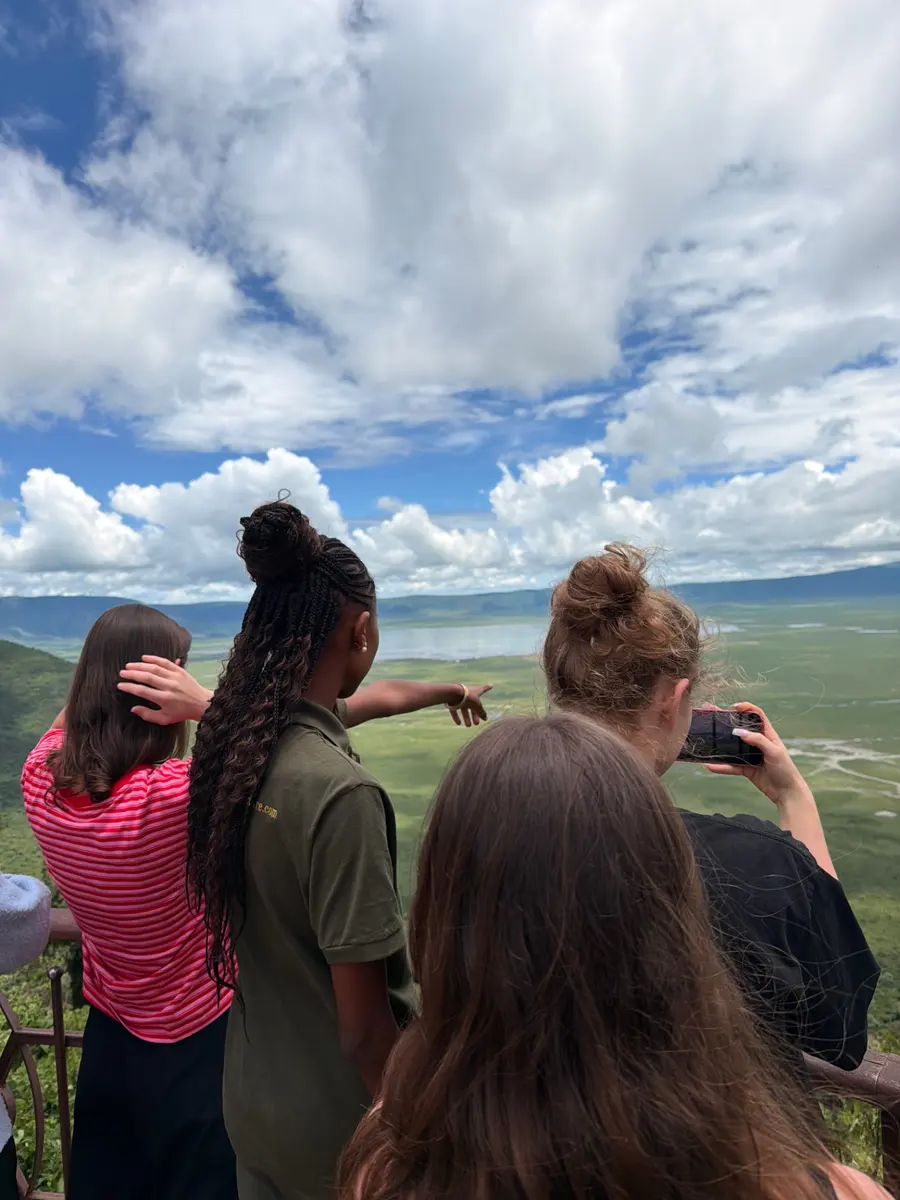
Stand on the rim of the Ngorongoro Crater for the first time and it is hard to take in the scale. Below you lies a vast, almost perfectly round bowl of grassland, lake and forest, with dark dots that turn out to be buffalo herds, and tiny pink lines along the water that are flamingos. Many of our guests tell us it is the moment their safari became real.
Here is everything you need to know to plan your day in the crater.
The crater is a caldera: what remains of a large volcano that collapsed in on itself a very long time ago. The result is an enclosed bowl roughly 600 metres deep and many kilometres across, with steep forested walls and a flat floor of grassland, swamp, woodland and a soda lake.
It sits within the Ngorongoro Conservation Area, a UNESCO World Heritage Site where wildlife and Maasai communities share the land. On the drive up from Karatu you will often see Maasai herders with their cattle on the highland slopes.
Because the crater walls are steep and there is water on the floor all year, many animals stay put rather than migrating. That makes the crater one of the most reliable places in Africa for wildlife viewing in a single day.
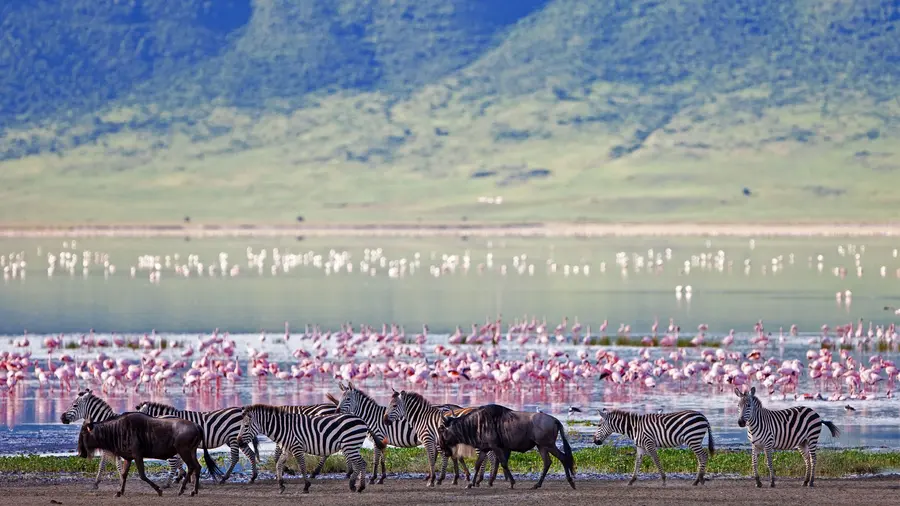
Expect large herds of buffalo, wildebeest and zebra, plenty of hyena and jackal, warthog, hippo in the pools, and some very impressive old bull elephants in the forested areas. Lion are frequently seen, sometimes resting right beside the track. Lake Magadi, the soda lake on the crater floor, often has flamingos when water levels are right.
The crater is also one of the best places in Tanzania to see the endangered black rhino. They are few in number and often keep their distance, so a sighting is never guaranteed, but your guide will know where to look and when to wait.
Most crater days start early. You leave your lodge on the rim or in Karatu before sunrise, often with a packed breakfast, so that you can be at the descent road when it opens. The light is soft, the animals are active and there are fewer vehicles.
The descent itself is a steep, winding road down the inside of the crater wall, with wonderful views. Time on the crater floor is limited by park rules, so a crater visit is usually a half day to most of a day, not an overnight stay. Your guide will plan the route around what is being seen that morning.
Lunch is a picnic at one of the designated sites, often beside a hippo pool. Keep an eye on the black kites overhead: they are famously bold and will happily take a sandwich out of your hand, so eat inside the vehicle or under cover.
In the afternoon you climb back up the ascent road and continue to your next stop, whether that is the Serengeti, Tarangire, Karatu or Arusha.
The crater rim sits at well over 2,000 metres, so mornings and evenings are cold, especially from June to August. Mist often hangs over the rim at dawn and burns off as the sun rises. Bring a warm fleece or light down jacket, a hat and something for your hands. Once you are on the floor, the day warms up quickly, so layers are the answer.
The crater is good all year because the wildlife stays. In the dry season, roughly late June to October, the grass is short and animals are easy to spot, but it is also the busiest period. In the green season, from November to May, the crater is lush and beautiful, with fewer vehicles, though the long rains around April and May can make the roads slippery.
Whatever the month, an early start is the best way to avoid the busiest hours on the floor.
The Ngorongoro Crater sits between Arusha and the Serengeti, so it fits naturally into a northern circuit safari. Many guests visit the crater on the way into the Serengeti, or at the end of their safari on the way back to Arusha. Tarangire, with its baobabs and big elephant herds, is an easy addition at the start.
If you are short on time, our 3-Day and 4-Day Ngorongoro & Serengeti packages combine a crater day with Serengeti game drives. With more time, a seven- to nine-day safari adds Tarangire and more nights in the Serengeti. You can read more about the area on our Ngorongoro destination page.
You can stay on the crater rim itself, where lodges look straight down into the caldera and you are closest to the descent road for an early start. The views at sunset and sunrise are unforgettable, though the rim is cold at night and the lodges here tend to be at the higher end.
Alternatively, many guests stay in or around Karatu, a small farming town below the highlands surrounded by coffee estates. It is warmer, generally offers more choice across budgets and is roughly an hour's drive from the crater gate. We will suggest whichever suits your route, comfort level and budget best.
Further reading
Related trip
4 days · 3 nights
You visit: Ngorongoro, Serengeti
Explore moreRead next
A year-round country with two very different personalities. Here is what the dry season, the green season and calving season mean for your safari.
Read the notePlan with us
Every itinerary is drawn by hand in our Arusha office — routing, pacing, camps and honest budget ranges. One conversation is usually enough to know whether we're the right fit.